"Korea Could Lose the Standard for AI Agent Commerce Payments"… ZEKTO Urges Preemptive Proof-of-Concept at Government's First Stablecoin Legislation Forum
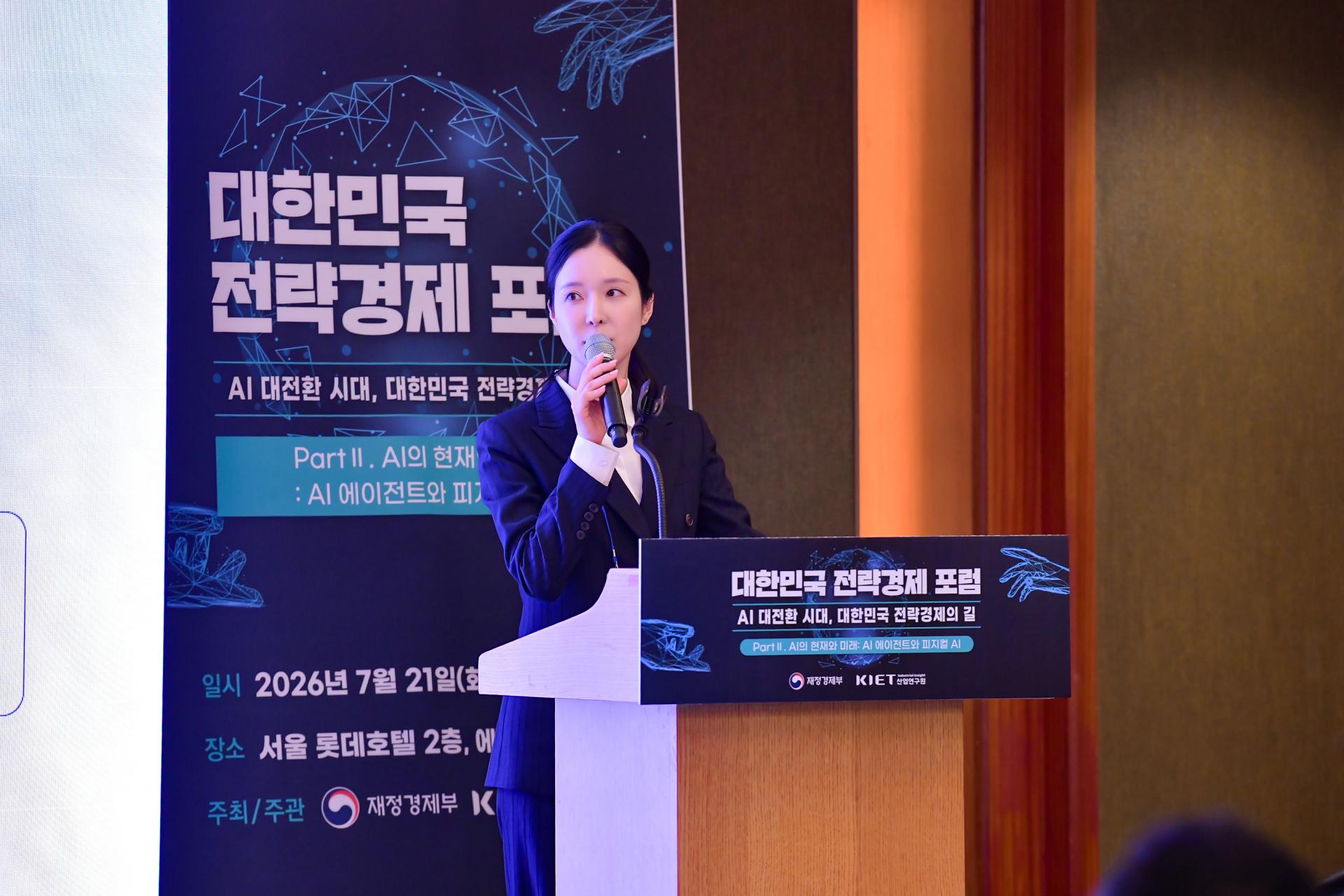
- Policy Direction Centered on AI Agent Commerce and Structural Changes in Stablecoins Presented at 'Republic of Korea Strategic Economy Forum' Hosted by Ministry of Economy and Finance
- ZEKTO Proposes Introduction of AI Authorization Verification 'KYA' and Conditional PoC Focused on Tourism, Reverse Cross-Border Commerce, and Cross-Border B2B
Lee Yu-jin, CEO of AI and blockchain venture ZEKTO, called for preemptive proof-of-concept to secure Korea's 'AI Payment Sovereignty' at the government's first official forum to discuss stablecoin legislation and AI agent payment issues.
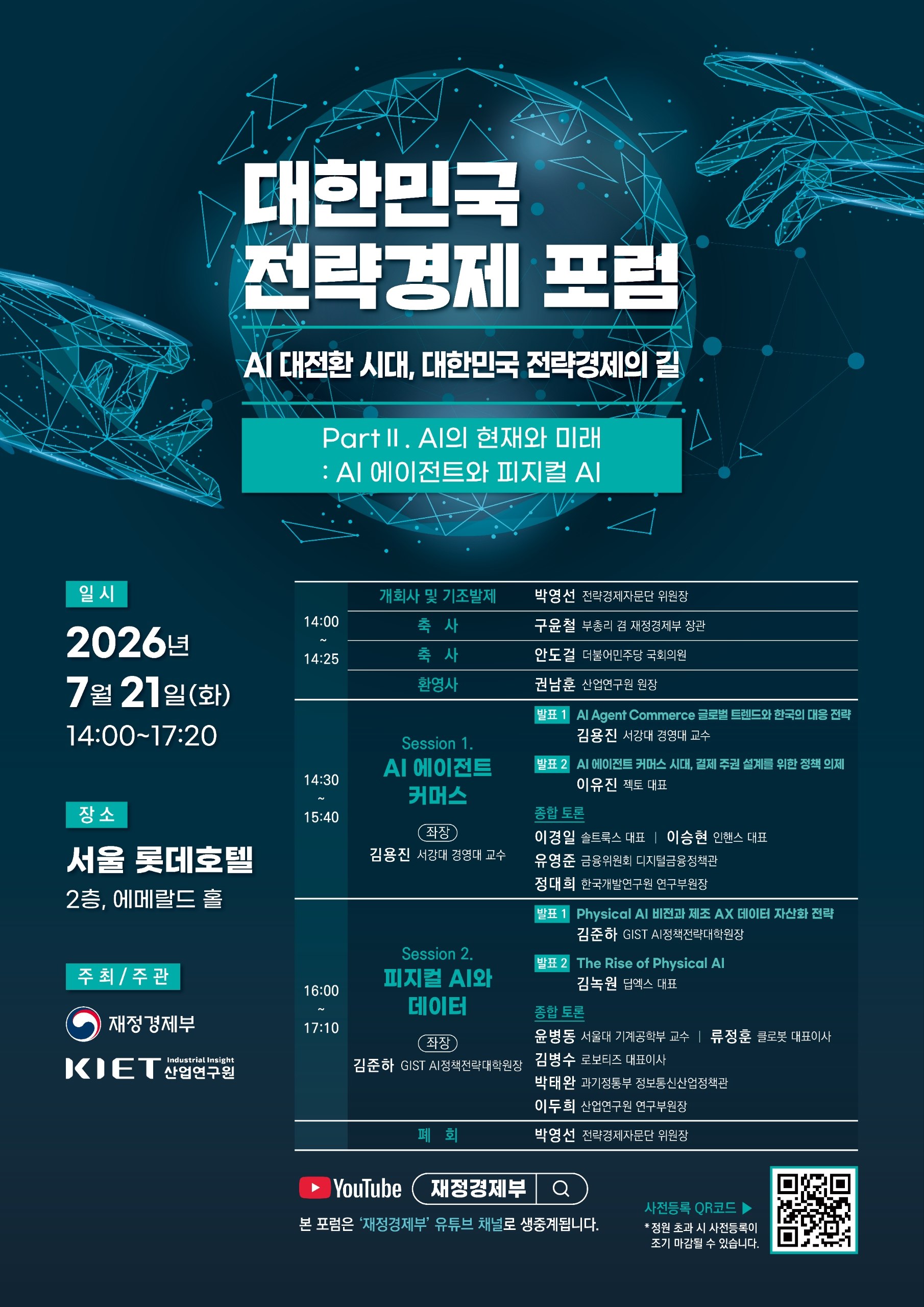
CEO Lee participated as a presenter at the AI Agent Commerce session of the 'Republic of Korea Strategic Economy Forum' held at Lotte Hotel Seoul on July 21, delivering a presentation titled 'Policy Agenda for Designing Payment Sovereignty in the Age of AI Agent Commerce'.
The forum, co-hosted by the Ministry of Economy and Finance and the Korea Institute for Industrial Economics and Trade (KIET), was the first government-led stablecoin policy forum held amid the push to pass the Digital Asset Basic Act within the year. Approximately 120 attendees participated, including a written congratulatory address from Deputy Prime Minister and Minister of Economy and Finance Koo Yoon-cheol, along with representatives from the National Assembly, financial authorities, academia, state-run research institutions, and industry.
In his written address, Deputy Prime Minister Koo emphasized that "speed determines success," pledging to prepare institutional improvements to enable AI commerce proof-of-concept through regulatory sandboxes.
Park Young-sun, Chair of the Ministry of Economy and Finance's Strategic Economic Advisory Council, stated that stablecoins should be viewed not merely as virtual assets, but as payment infrastructure used by AI. She said that "national competitiveness will be determined not only by technology, but by how quickly institutions are prepared," adding that Korea must be the first to design the rules of the AI economy.
Professor Kim Yong-jin of Sogang University, who delivered the first presentation, projected that the global standard for AI agent commerce is likely to solidify within the next 12 to 18 months. He warned that "latecomers will only bear the cost of compliance and will be unable to include their own agenda," proposing a regulatory sandbox-type multi-consortium to secure agent payment standards and trust infrastructure.
Professor Kim particularly emphasized that KYA (Know Your Agent) — which verifies the identity and authorization of AI agents beyond the existing KYC (Know Your Customer) framework — will become a core asset.
CEO Lee then presented concrete measures for implementing KYA in actual payment and supervisory systems, diagnosing that this standards competition will ultimately lead to a competition for dominance over payment networks. Since AI agents transact across multiple countries and platforms around the clock, payment networks must also support API-based conditional execution, real-time settlement, and auditable records. Stablecoins were put forward as a programmable payment rail suited for such transactions. If KYA is the control mechanism that verifies an AI's identity and scope of delegation, then the stablecoin payment network is the execution infrastructure that connects verified authorization to actual payments and settlements.
The system is designed so that users pre-register payment limits, permitted items, counterparties, and authorization expiration periods granted to AI, with only transactions that pass pre-payment policy verification being executed. After transactions, an auditable record is kept of which agent made the payment and under what authorization.
If overseas AI platforms and wallets dominate the entire payment process, even when domestic products are sold, payment fees, foreign exchange and settlement revenues, and transaction data could accumulate with overseas operators. Conversely, if domestic financial institutions secure the payment gateway, merchants can convert overseas payment demand into Korean won revenue without directly holding digital assets.
ZEKTO proposed prioritizing foreign tourist domestic payments, reverse cross-border e-commerce, and cross-border B2B micropayments as initial proof-of-concept targets. The proposal calls for limiting participating operators and transaction limits while jointly verifying KYA, anti-money laundering (AML), fraud detection systems (FDS), and emergency suspension functions in actual transactions.
"If we prohibit it, the market moves overseas. If we leave it unregulated, supervisory authority moves overseas. Through conditional proof-of-concept, global payment demand must be connected to Korean won revenue for domestic companies, and transaction data and supervisory standards must be accumulated domestically."
"Countries that join after global standards are finalized become users, but countries that participate at the proof-of-concept stage can become designers. Korea must be the first to set the standard for the era in which AI makes payments."
Lee Yu-jin, CEO of ZEKTO
Source: ZEKTO
※ This media has been translated using AI and is produced by our company based on direct participation in the event.


"Korea Could Lose the Standard for AI Agent Commerce Payments"… ZEKTO Urges Preemptive Proof-of-Concept at Government's First Stablecoin Legislation Forum
- Policy Direction Centered on AI Agent Commerce and Structural Changes in Stablecoins Presented at 'Republic of Korea Strategic Economy Forum' Hosted by Ministry of Economy and Finance
- ZEKTO Proposes Introduction of AI Authorization Verification 'KYA' and Conditional PoC Focused on Tourism, Reverse Cross-Border Commerce, and Cross-Border B2B
Lee Yu-jin, CEO of AI and blockchain venture ZEKTO, called for preemptive proof-of-concept to secure Korea's 'AI Payment Sovereignty' at the government's first official forum to discuss stablecoin legislation and AI agent payment issues.
CEO Lee participated as a presenter at the AI Agent Commerce session of the 'Republic of Korea Strategic Economy Forum' held at Lotte Hotel Seoul on July 21, delivering a presentation titled 'Policy Agenda for Designing Payment Sovereignty in the Age of AI Agent Commerce'.
The forum, co-hosted by the Ministry of Economy and Finance and the Korea Institute for Industrial Economics and Trade (KIET), was the first government-led stablecoin policy forum held amid the push to pass the Digital Asset Basic Act within the year. Approximately 120 attendees participated, including a written congratulatory address from Deputy Prime Minister and Minister of Economy and Finance Koo Yoon-cheol, along with representatives from the National Assembly, financial authorities, academia, state-run research institutions, and industry.
In his written address, Deputy Prime Minister Koo emphasized that "speed determines success," pledging to prepare institutional improvements to enable AI commerce proof-of-concept through regulatory sandboxes.
Park Young-sun, Chair of the Ministry of Economy and Finance's Strategic Economic Advisory Council, stated that stablecoins should be viewed not merely as virtual assets, but as payment infrastructure used by AI. She said that "national competitiveness will be determined not only by technology, but by how quickly institutions are prepared," adding that Korea must be the first to design the rules of the AI economy.
Professor Kim Yong-jin of Sogang University, who delivered the first presentation, projected that the global standard for AI agent commerce is likely to solidify within the next 12 to 18 months. He warned that "latecomers will only bear the cost of compliance and will be unable to include their own agenda," proposing a regulatory sandbox-type multi-consortium to secure agent payment standards and trust infrastructure.
Professor Kim particularly emphasized that KYA (Know Your Agent) — which verifies the identity and authorization of AI agents beyond the existing KYC (Know Your Customer) framework — will become a core asset.
CEO Lee then presented concrete measures for implementing KYA in actual payment and supervisory systems, diagnosing that this standards competition will ultimately lead to a competition for dominance over payment networks. Since AI agents transact across multiple countries and platforms around the clock, payment networks must also support API-based conditional execution, real-time settlement, and auditable records. Stablecoins were put forward as a programmable payment rail suited for such transactions. If KYA is the control mechanism that verifies an AI's identity and scope of delegation, then the stablecoin payment network is the execution infrastructure that connects verified authorization to actual payments and settlements.
The system is designed so that users pre-register payment limits, permitted items, counterparties, and authorization expiration periods granted to AI, with only transactions that pass pre-payment policy verification being executed. After transactions, an auditable record is kept of which agent made the payment and under what authorization.
If overseas AI platforms and wallets dominate the entire payment process, even when domestic products are sold, payment fees, foreign exchange and settlement revenues, and transaction data could accumulate with overseas operators. Conversely, if domestic financial institutions secure the payment gateway, merchants can convert overseas payment demand into Korean won revenue without directly holding digital assets.
ZEKTO proposed prioritizing foreign tourist domestic payments, reverse cross-border e-commerce, and cross-border B2B micropayments as initial proof-of-concept targets. The proposal calls for limiting participating operators and transaction limits while jointly verifying KYA, anti-money laundering (AML), fraud detection systems (FDS), and emergency suspension functions in actual transactions.
Source: ZEKTO
※ This media has been translated using AI and is produced by our company based on direct participation in the event.